Basic Information
Scientific classification
- Chinese name: Ant-eating spider
- Scientific name: Zodariidae (representative genus: Zodarion, etc.; also includes some ant-mimicking jumping spiders)
- Classification: Arthropoda
- Family and Genus: Zodariidae Zodarion
Vital signs data
- Body length: 2–12 mm (common)
- Weight: Small arthropods, varies from individual to individual.
- Lifespan: Approximately 1–2 years (estimated)
Significant features
Specialized in ant hunting (chemical/behavioral mimicry; flanking and retreating); terrestrial; female spider guarding eggs.
Distribution and Habitat
Widely distributed in tropical to temperate zones; found in leaf litter, grasslands, sandy areas, and crevices under rocks, near ant trails.
Appearance
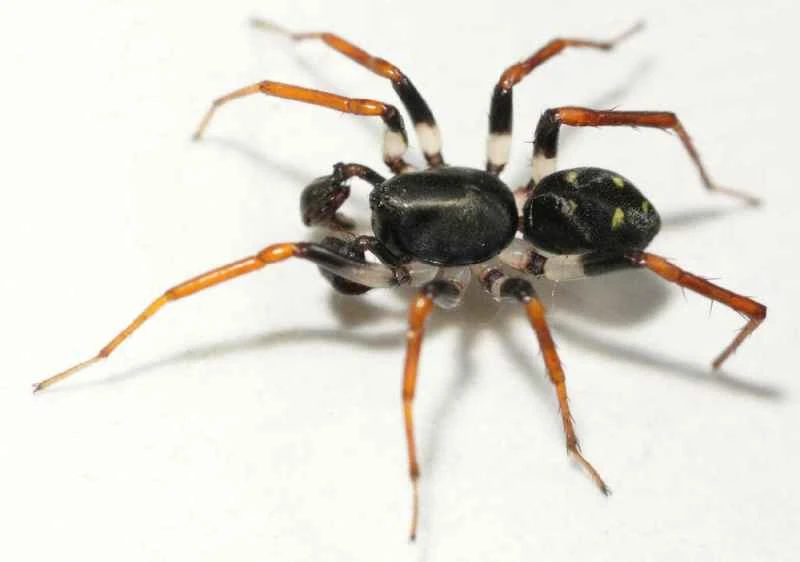
Brown to black; some parts have an ant-like body shape; long and slender legs, good at running.
Detailed introduction
Ant-eating spiders generally refer to spiders such as those in the family Zodariidae that have a high degree of preference for or obligation to prey on ants; some jumping spiders (such as the genus Myrmarachne ) are known for their ant mimicry , but not all of them primarily feed on ants.
Ecology and Biology
Diet and strategy: It preys on worker ants , attacking them repeatedly from the side and back , avoiding their mandibles and stingers.
Mimicry and camouflage: Several types of chemical mimicry (acquiring/simulating ant-like cutaneous hydrocarbons) and behavioral mimicry (raising forelegs like "antennae").
Life cycle: Mostly terrestrial , they spin webs or build nests in leaf litter/under rocks, and the female spider often protects the eggs.
Morphology and Recognition
Body length: commonly 2–12 mm ; slender legs, good at running.
Body color: brown to black, some with an ant-like body shape (narrowed anterior abdomen, resembling segmentation).
Eye type: eight-eyed; the structure of the male spider's pedipalps is often of identification value.
Distribution and Habitat
Widely distributed in tropical to temperate zones ; commonly found in leaf litter, grasslands, sandy areas , and crevices under rocks, often overlapping with ant tunnels/nest activity areas.
Conservation and Human Interaction
Ecological role: As a natural enemy of ants , it helps maintain the balance of invertebrate communities on the ground.
Safety: Generally of no medical significance to humans, but people are often shy and accidental bites are usually mild.
IUCN: This entry is a general overview of taxa ; most species have not been independently evaluated, and this site marks the general overview entry as not evaluated (NE) .
Frequently Asked Questions
Q1: Do they only eat ants? Mostly ants , but they will also occasionally prey on other small arthropods.
Q2: How to distinguish it from the ant-mimicking jumping spider? The ant-mimicking jumping spider is known for its mimicry but does not necessarily eat ants; many species in the Sclerotinidae family are more specialized in ant hunting .
Q3: Will they invade your home? Most are terrestrial in the wild ; individuals that enter your home can be gently moved outdoors.
Q4: Are they beneficial to the ecosystem? Yes. They help regulate ant colonies and stabilize the surface food web.